This seems like a simple task, but far from it.
One reason I am making this post is because I had a movie watching go very well and the one that followed it was pretty embarrassing–both because I was not prepared as the first and because the movie I selected (despite being recommended on ESL websites) was extremely inappropriate.
So we’re going to go over how to best prepare for this kind of thing in the future.
LEVEL: Intermediate to Advanced
TIME: 15-20 minutes/class across multiple sessions
PURPOSE: Listening comprehension
MATERIALS:
- Movie
- Worksheets. Each worksheet should have.
- New vocabulary
- Fill in the blank quotes from the movie
- Comprehension questions
- Prediction questions
- Final discussion questions (2-3)
PREPARTION: See Below
GOAL: Students watch movie and have a conversation about it.
ACTIVITY:
You can do this all in one class, but it is better for multiple classes to not overwhelm students, but also don’t drag it past 2 weeks. You can do 1-2 movie sections per class, each being between 10-20 minutes each.
Pass out worksheets for the parts of the movies you will watch.
Introduce the vocabulary for the current section and play the movie up until the breakpoint. After this, go over the fill-in-the-blank, ask the comprehension and prediction questions, continue.
When the movie is complete, students answer the discussion questions, either via writing or in a group.
PREPARATION:
As stated above, this is harder than it sounds. So let’s go over a short story to help get an idea of what shouldn’t happen.
The first time I did this activity, I looked up a list of ESL friendly movies. I locked in on the most obvious one: Terminal staring Tom Hanks.
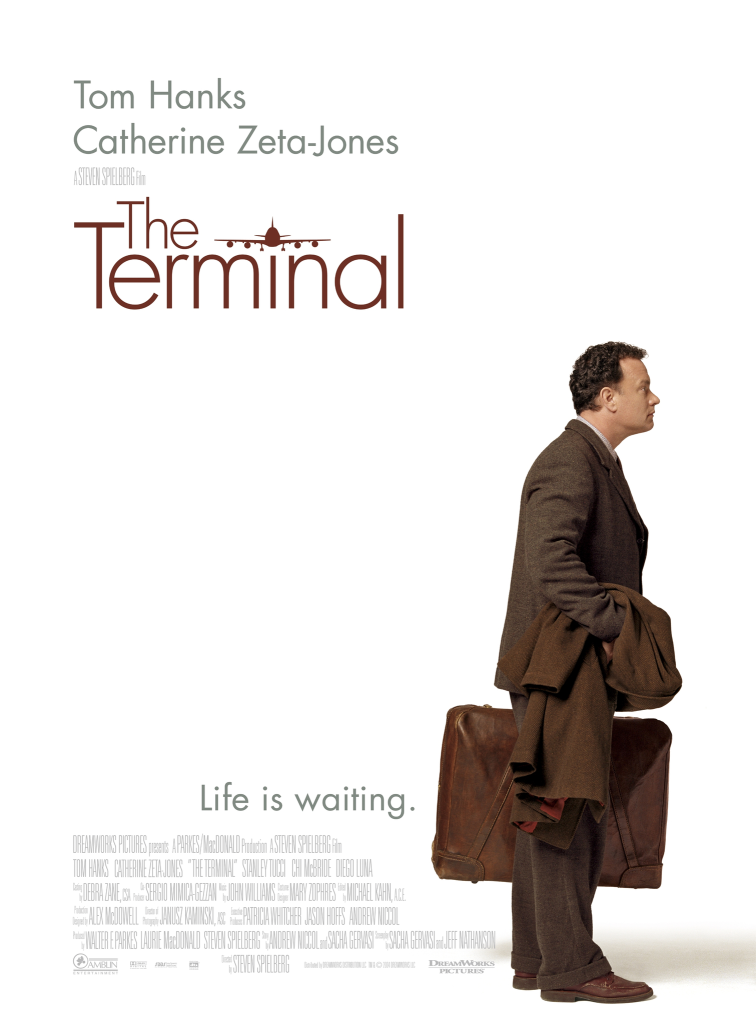
This movie is delightful. It’s something my students could greatly empathize with. I found beautiful worksheets all nicely prepared that I’ve since used as model, so I didn’t need to do much after that.
Students wanted another movie, and since this one went so well, I went forward with it by choosing another movie I saw recommended on ESL-friendly movie websites: Stranger than Fiction staring Will Ferrell.

This is a movie I have recommended to people multiple times myself–though I’ve only watched it twice at most. I’m an existential horror author, so me liking it is kind of a given. Except, as I (a male teacher) put on the movie in front of an entire class of mostly female students, I realized in my horror there were parts of the movie I completely forgot about.
You see, people curse in this movie. And not only do they curse, but the protagonist is very much a heterosexual man with heterosexual man fantasy thoughts about a woman.
Needless to say, I dropped the movie after the next class and no one complained about it. For that reason, I’d argue this movie is not, in fact, appropriate for an ESL classroom and I don’t know why it was on a list. It’s certainly a good way to expose students to a variety of different ways English speakers talk, but I think you need to be a nerd about that before hand, not an average ESL student.
So, how are we going to do this right next time? Or from scratch for that matter…
STEP 1: Select a movie. Consider student ages, cultural background, gender, what students are generally interested in, and so forth.
- To make things easier, you can always look up movies other ESL classes have shown to their students. These may have material already prepared.
STEP 2: IMPORTANT— Look up the rating. If higher than G, look up the “Parent’s Guide” section on Imdb, or another website.
- Don’t assume because you have a classroom of adults, a movie is automatically okay to show. Some movies have sex, lots of cursing, etc. You want students to learn/practice, not be uncomfortable.
STEP 3: Skim through the movie and chop it into 10-20 minute sections. Ball park of 15 minutes, though try to do what makes sense.
STEP 4: Watch the movie in sections and take notes.
- It’s an excuse to watch a movie.
- Write down idioms, new vocabulary, and culture specific things. You don’t need everything, maybe about 10 words/phrases a section.
- Extract some quotes. Worksheets I used were about 6-7 each section.
- Write down three comprehension questions (What happened?)
- End of each section write down three prediction questions (What do you think will happen next?)
But wait! Can’t I just get a movie script and have ChatGPT compile all the vocabulary, sections, and questions?
Yes and no. Movie scripts can sometimes be found on screenwriter websites as a resource for study (literally why they’re put online). However, not everything in the screenplay will be in the movie. My attempt to do this also resulted in “clumping”–that is, a section was 15 minutes long, and all the vocabulary, fill in the blank, etc. were all just the first 5 minutes.
STEP 5: Compile your worksheets!
- This you can plug into AI.
STEP 6: Create 2-3 discussion questions about the movies plot, themes, characters, etc.
And you are done. Yaaaaay!!!